
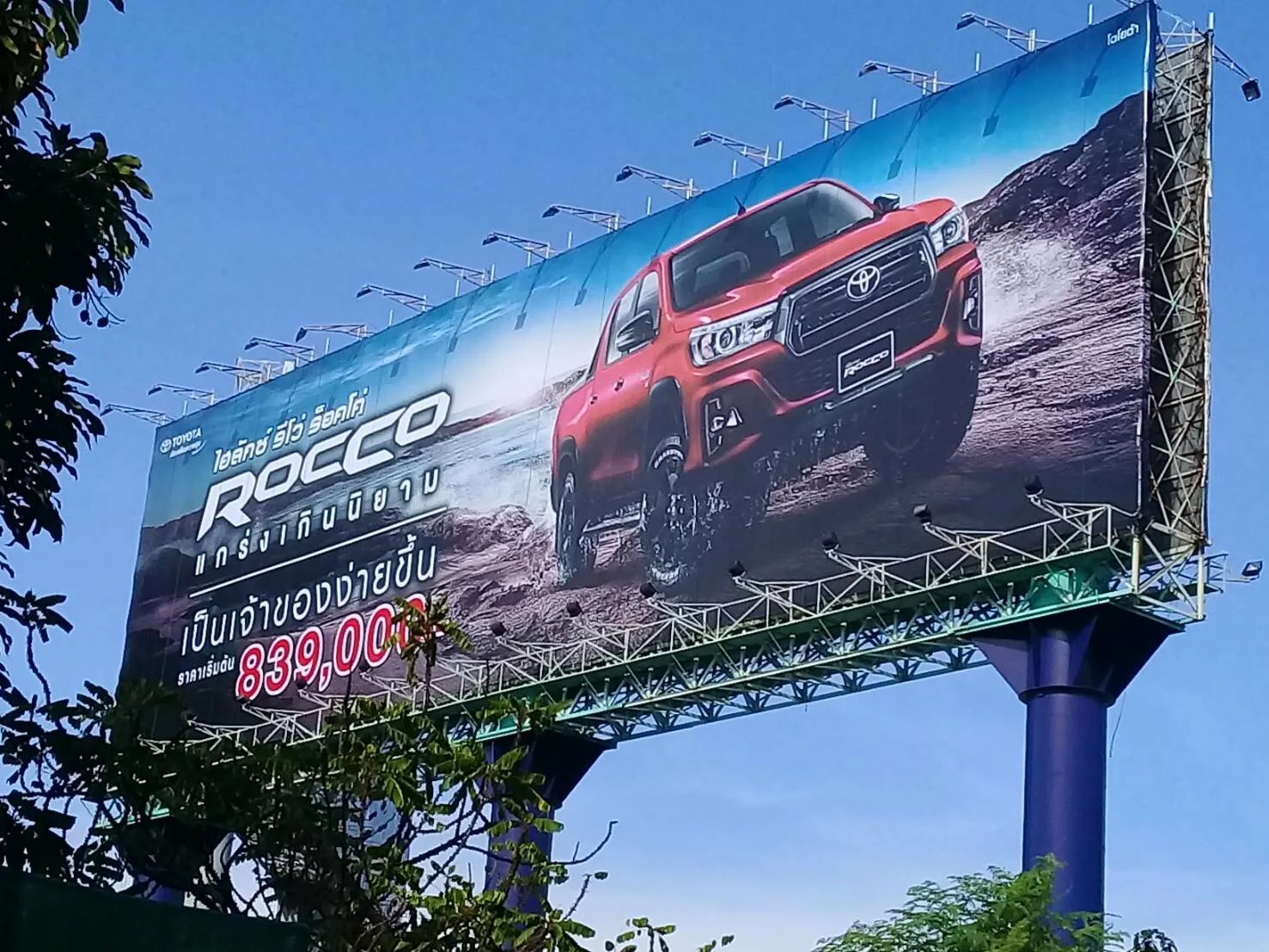
Outdoor signage needs more than a good-looking artwork file. A sign installed outside has to handle sun, rain, humidity, dust, wind, and real viewing distance. A restaurant on a roadside may need an illuminated sign that stays readable at night. A construction project may need large vinyl graphics that can be changed when the campaign changes. A sales office or corporate building may need dimensional letters that feel permanent and credible.
From real production and installation work, the right outdoor sign usually starts with simple questions: How many years should it last? How far away will people see it from? Does it need to be visible at night? Will the message change often? Can the installation point support the weight and wind load?
Vinyl signs
Vinyl is one of the most practical and widely used outdoor sign materials. It is suitable for promotions, temporary storefront signs, event banners, project signs, and jobs that need fast production. Vinyl can be printed in full color, produced at large scale, kept relatively lightweight, and changed when the promotion or message changes.
The limitation is that vinyl is not a permanent material. Color, surface condition, and tension will change with sun, rain, and time. If it is not stretched correctly or the fixing points are weak, the sheet can wrinkle or tear in strong wind. Typical use ranges from several months to around one or two years, depending on material quality, ink, finishing, and installation location.
Vinyl on a frame
Vinyl stretched on a steel frame is useful when the sign needs to be larger, cleaner, and more stable than a hanging banner. The frame keeps the face flat and readable, making it suitable for project fronts, roadsides, factory entrances, and construction fences.
The main advantage is that the vinyl face can be replaced while the structure remains. This keeps long-term campaign costs more controlled. The frame, however, must be planned for wind and site conditions. A weak frame or poor fixing can cause damage even if the printed vinyl itself is acceptable.
Billboards
Billboards are used when a business needs large-scale visibility from a distance. The important point is not only size, but structure, viewing distance, traffic speed, and message clarity. A good roadside billboard uses short wording, large letters, strong contrast, and a layout that can be understood quickly.
Billboards are common for property projects, large retail stores, service centers, construction projects, and brands that need to communicate across a wide area. The structure can last for years, while the printed face can be changed by campaign.
Acrylic letters
Acrylic letters are suitable for storefronts, covered outdoor areas, sales offices, clinics, restaurants, and company signs that need a clean, modern look. Acrylic gives sharp edges, strong color, and a neat finish. It can also be used with lighting systems.
For outdoor use, thickness, fixing method, expansion allowance, and sunlight exposure matter. Acrylic can expand with heat and may change condition over time if exposed to harsh weather without proper planning.
Metal letters
Metal letters, such as stainless steel, aluminum, brass, or painted metal work, are chosen when durability and a permanent brand image are important. They are common on office buildings, property projects, factories, showrooms, retail spaces, and organizations that want a professional appearance.
Metal costs more than many sheet materials and needs more precise production and mounting, but it normally gives a longer service life when the material and finish are selected correctly for the location.
Plaswood
Plaswood is a lightweight sheet material that is easy to cut, shape, paint, or combine with stickers. It is useful for smaller outdoor signs, wayfinding, menu signs, promotional boards, and shaped panels where budget and weight need to be controlled.
It is not the best choice for long-term exposure to heavy sun and rain without support or finishing. For outdoor use, the expected lifespan, thickness, backing, and installation method should be clearly defined.
Lightboxes
Lightboxes are suitable for businesses that need night visibility, such as restaurants, pharmacies, clinics, convenience stores, and roadside shops. They can use acrylic faces or printed vinyl faces depending on size, budget, and image quality.
A lightbox must be planned around LED quality, power supply, waterproofing, heat ventilation, and access for repair. If the cabinet is made without service access, future maintenance becomes difficult.
LED signage
LED signage includes LED letters, illuminated boxes, front-lit letters, halo-lit letters, and other lighting systems. The advantage is better night visibility with lower power consumption than older systems. Outdoor LED work must consider water, dust, heat, and future service access.
Conclusion
If the budget needs to be controlled and the message changes often, vinyl or vinyl on a frame is usually practical. If the goal is long-distance visibility, a billboard is more suitable. If the brand image needs to feel permanent, metal letters or illuminated letters are stronger choices. If the sign must read clearly at night, a lightbox or LED system should be considered. The best outdoor sign is chosen by lifespan, site condition, viewing distance, budget, and maintenance needs, not by appearance alone.